Worked example: Goblet of Fire
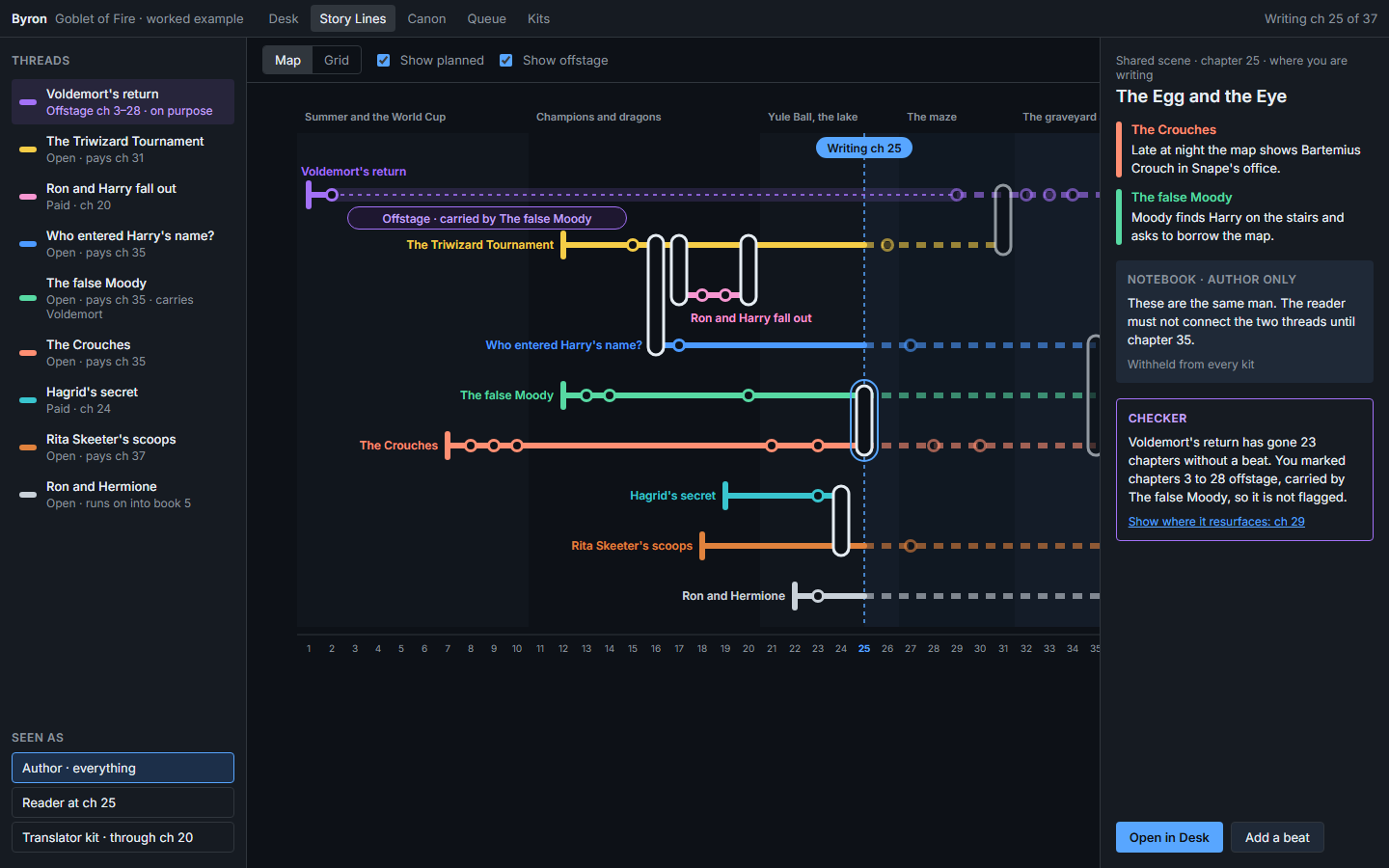
To test the design on a real book, here is the structure of Harry Potter and the Goblet of Fire (J. K. Rowling, 2000) as Story Lines would show it to an author writing chapter 25. The plot summaries are our own short descriptions; the stops are a selection for the demonstration, not a full analysis.
The book’s best-known structural trick is the reason for one of the map’s marks. Voldemort’s plot all but leaves the page between chapters 2 and 29, carried in secret by the false Moody. A plain overdue check would flag that thread. Marking the stretch offstage, carried by another thread, tells Byron it is deliberate; kits never show the mark.
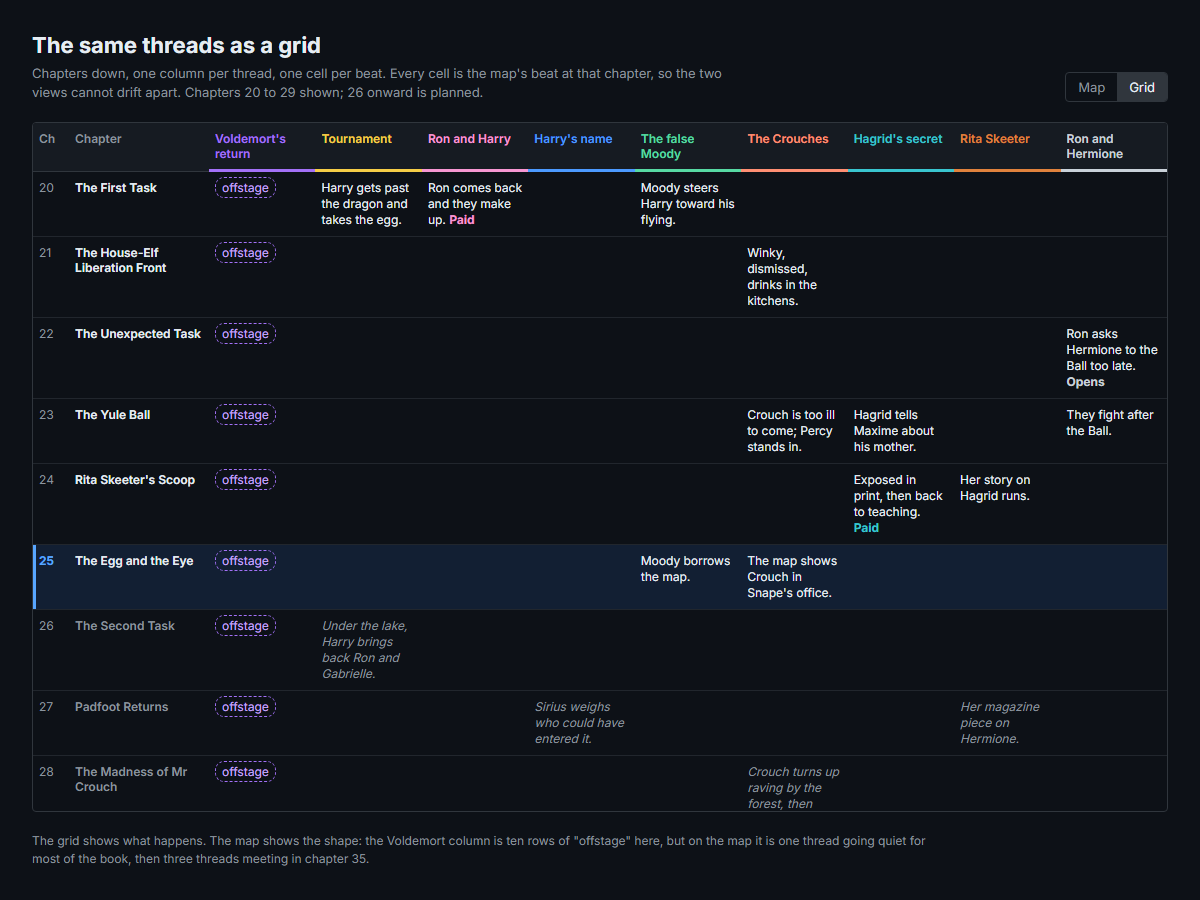
The same threads as a grid
Section titled “The same threads as a grid”Each cell is the map’s beat at that chapter, so the two views cannot drift apart. The grid shows what happens; the map shows the shape.
What a translator sees
Section titled “What a translator sees”A kit bounded after chapter 20, opened in Housecat. Nothing after the bound arrives, the offstage mark and the author’s notebook are absent, and the false Moody’s thread name is withheld because the name itself would be a spoiler.
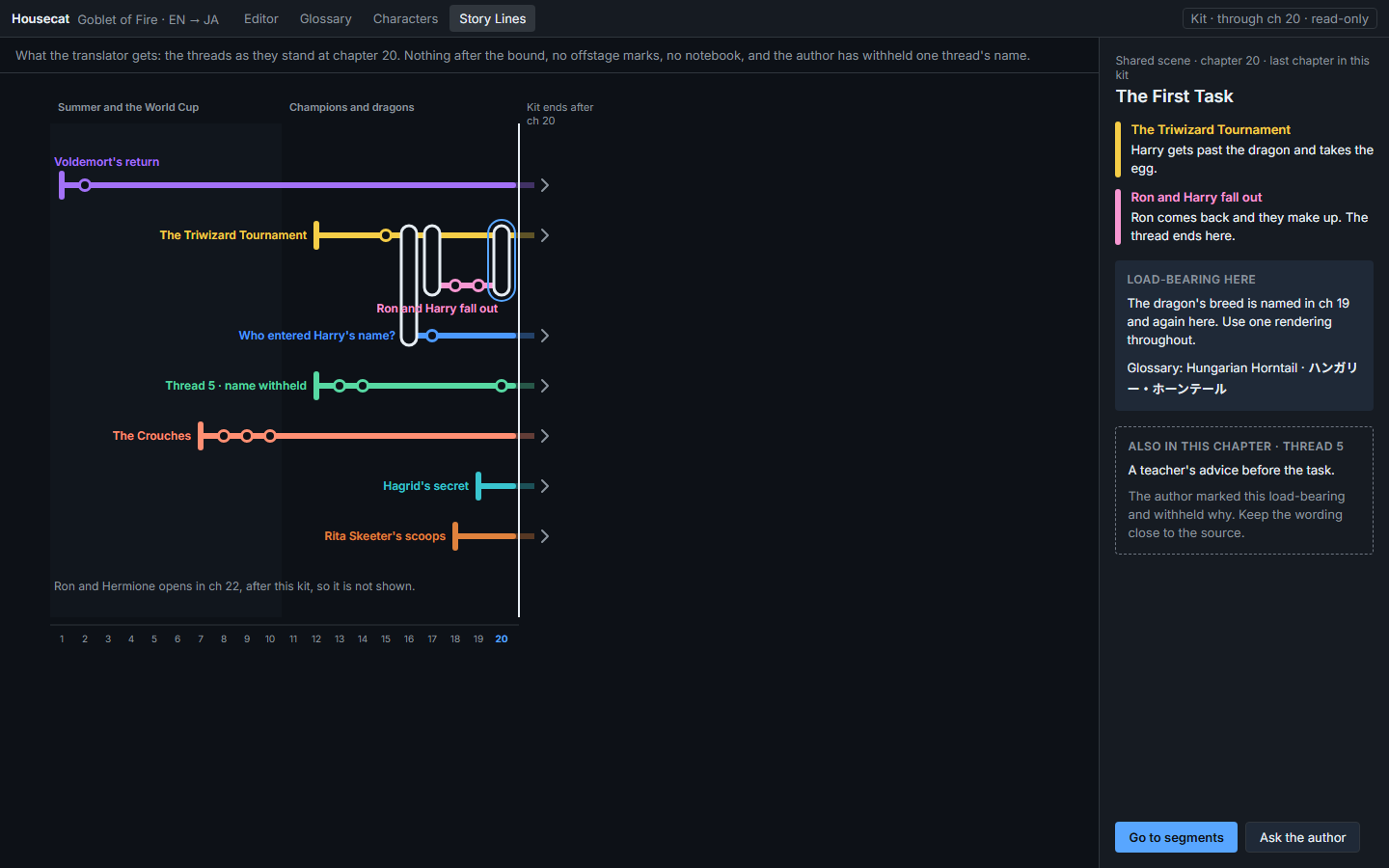
The Japanese glossary entries shown are illustrations, not checked against the published translation.